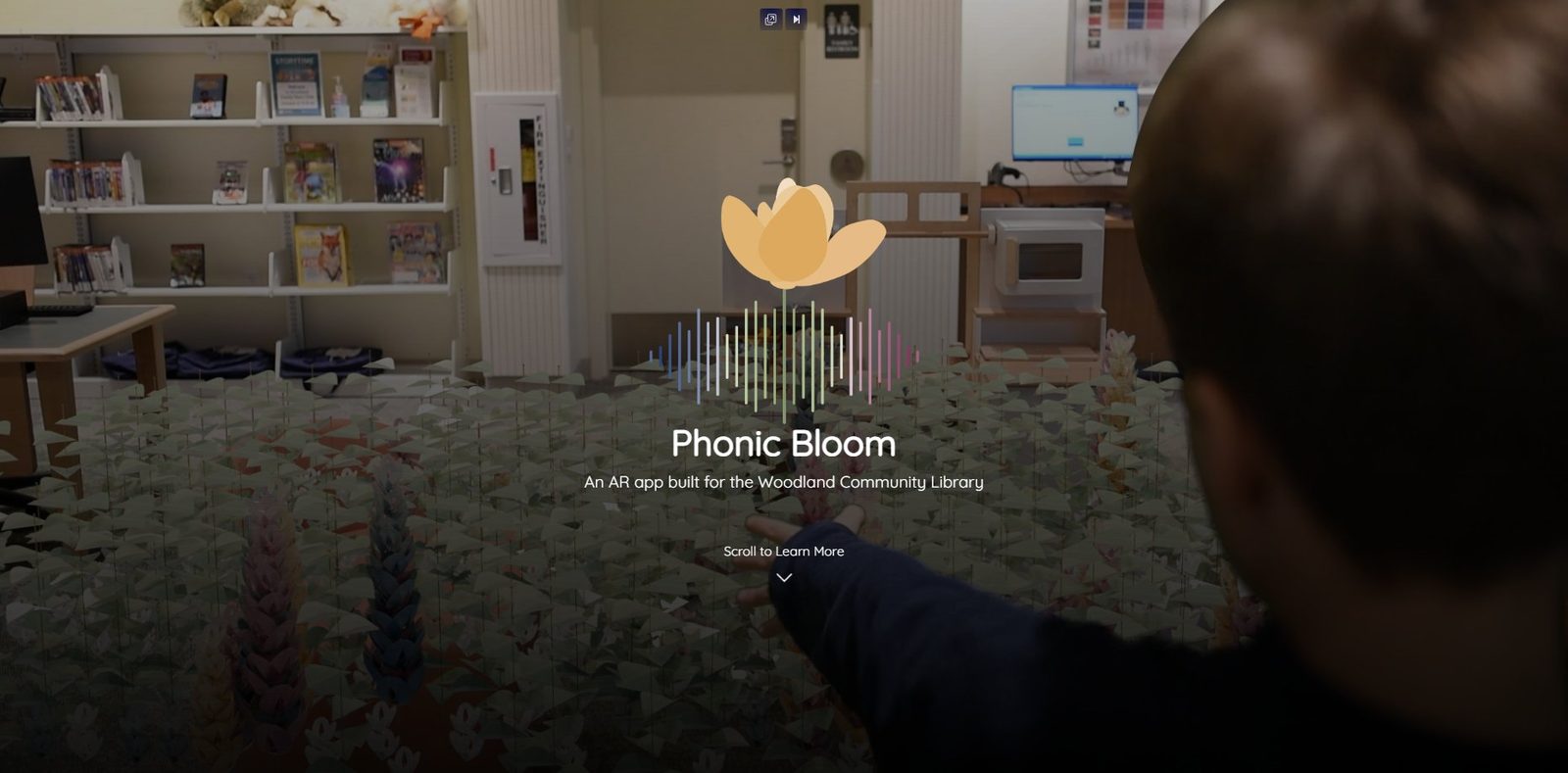
The Brief
Every language carries a community's identity. The sounds people make when they speak — plosives, fricatives, vowels — aren't just linguistics. They're culture, heritage, and belonging.
Phonic Bloom was a physical art installation commissioned to visualize those sounds. Our team was brought in to build the digital platform that extended the installation's reach — making the research, the process, and the meaning accessible to the Woodland Regional Library's community.
The challenge: build something that anyone could engage with, regardless of their linguistic background, technical comfort, or ability level.
Research & Discovery
As team lead, I organized and conducted a series of specialist interviews to understand the domain before we designed anything. We spoke with 3 domain experts in phonetics and linguistics and 2 designers of the physical Phonic Bloom sculpture.
Specialist Interview — Janet Tom Cowell, Associate Professor of Applied Linguistics, Portland State University
The consistent message from every interview: phonetic concepts are deeply technical, but the human experience of language is universal. Our job was to bridge that gap.
The Complexity We Were Designing For
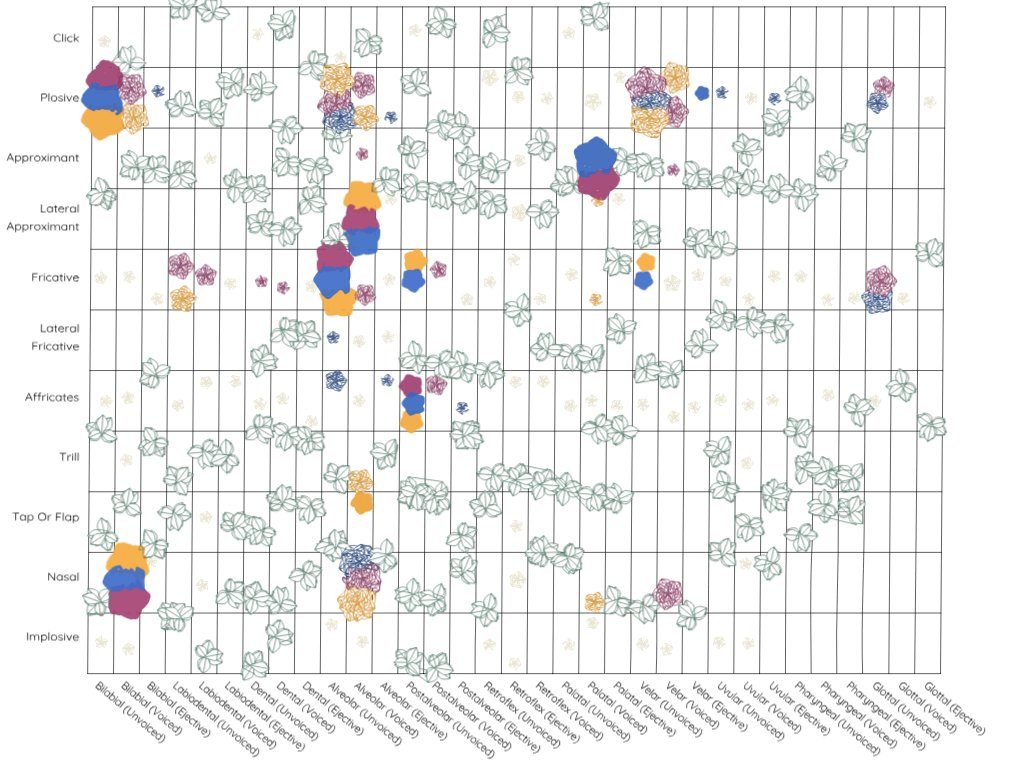
This is the underlying data structure we needed to make accessible — every intersection representing a phonetic sound across dozens of languages. Our job was to make this navigable for a library patron encountering phonetics for the first time.
Complexity is the barrier
Technical terminology was excluding the very community the installation was meant to celebrate. Plain language and visual metaphor were essential.
Community connection matters
Users didn't just want to learn about phonetics — they wanted to see themselves in the content. Language is personal.
Accessibility from day one
Library patrons include people of all ages, abilities, and backgrounds. Accessibility wasn't a feature — it was the brief.
Multi-device context
Users would be engaging on site at the installation — on phones, tablets, and laptops. Responsive design wasn't optional.
Design Process
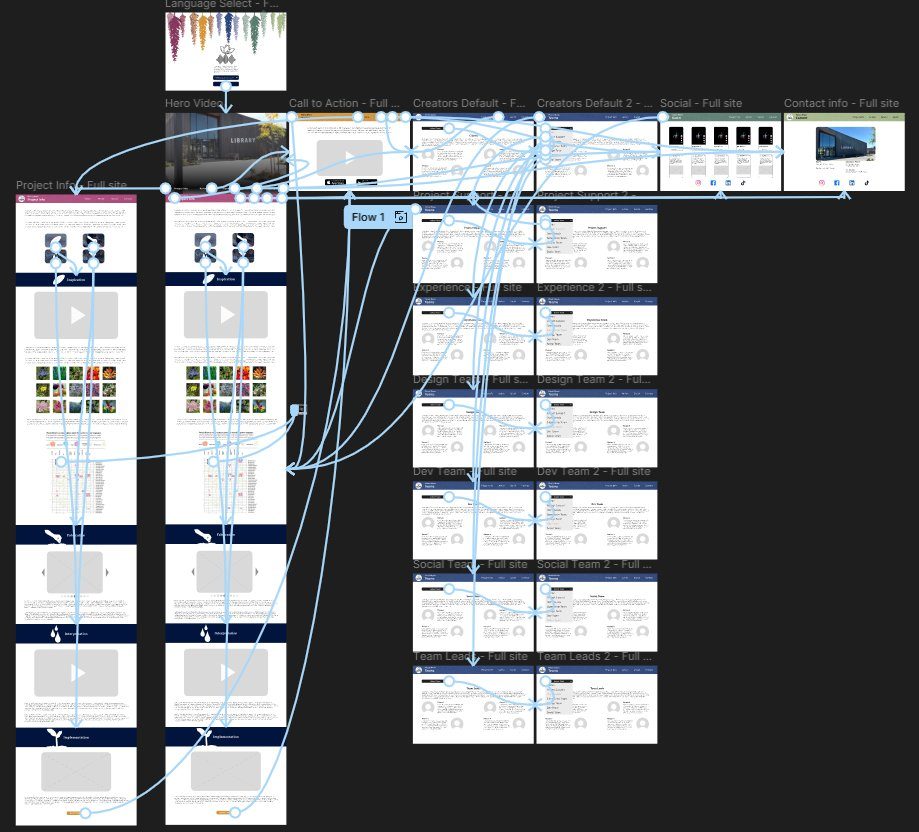
Because users would be standing next to a physical installation and pulling out whatever device they had, responsive design wasn't a nice-to-have — it was a core requirement. Wireframes were developed simultaneously across mobile, tablet, and desktop to ensure the experience held up at every size.
Responsive Wireframes — Mobile · Tablet · Desktop
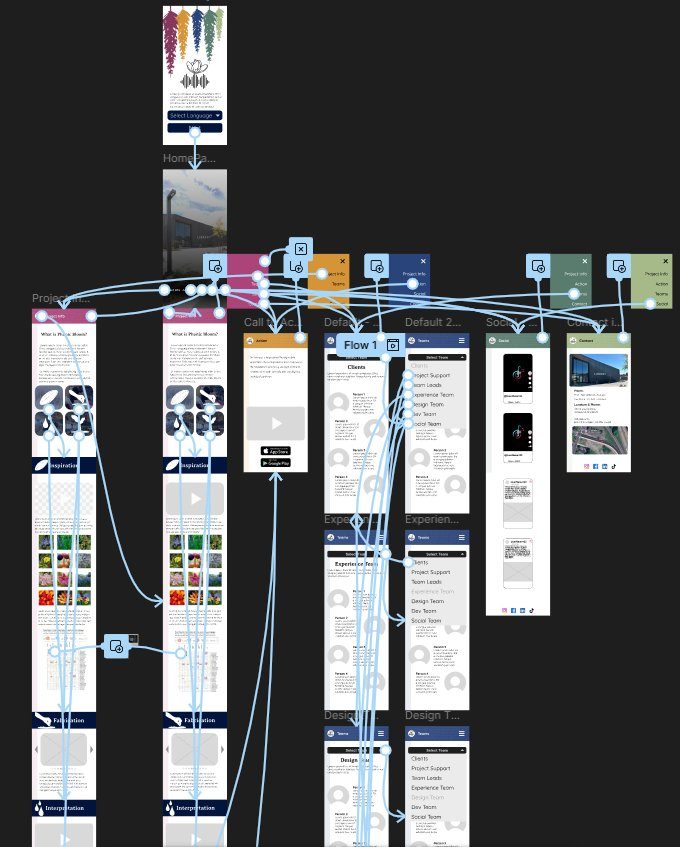
Mobile
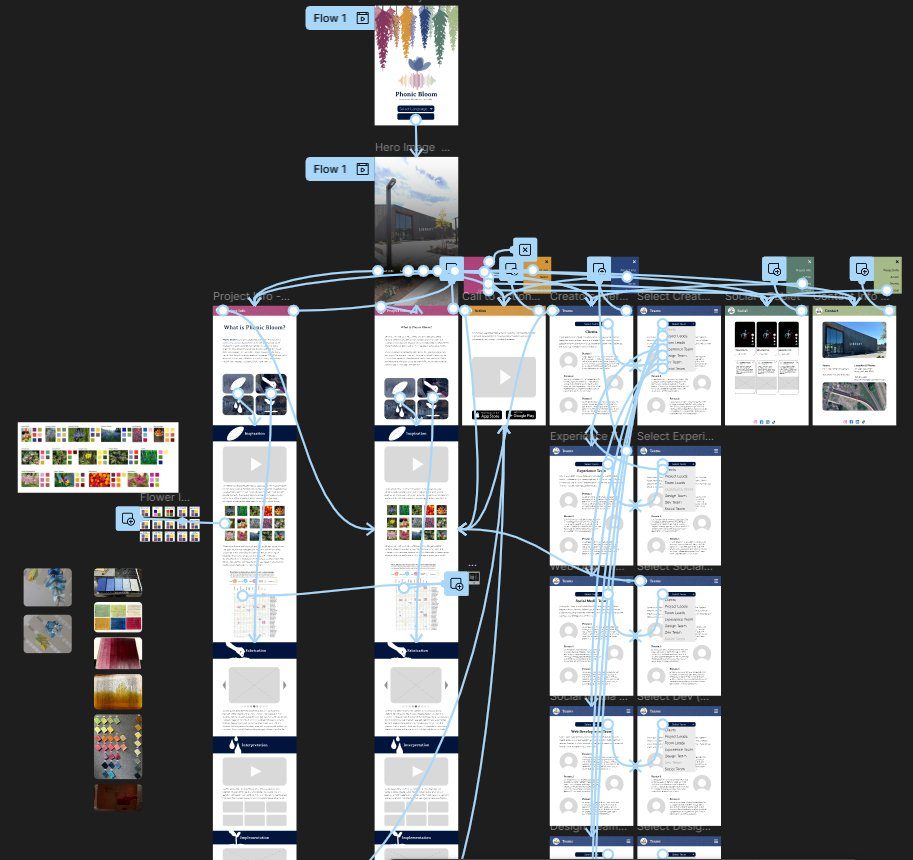
Tablet
Desktop
Component System
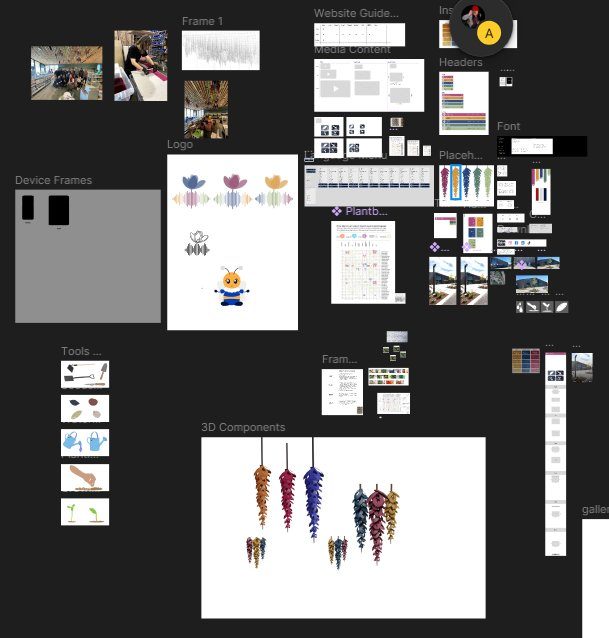
Rather than designing one-off elements, we built a reusable component system in Figma. Changes made to a component propagate across the entire project — reducing inconsistency and making iteration faster. This was a deliberate systems thinking decision, not just a design convenience.
Leading the Team
This was a real client project with a real deadline. As team lead, my responsibilities went beyond design:
Daily Coordination
I organized daily tasks for each team member, made sure everyone knew what they were working on, and removed blockers before they became problems.
Research Translation
I synthesized our specialist interviews into clear design direction the whole team could execute against — turning expert knowledge into actionable briefs.
Client Communication
I managed communication with the library, presenting progress and incorporating feedback into our design iterations.
Accessibility Standards
I ensured WCAG compliance was built into our design decisions from the start, not retrofitted at the end.
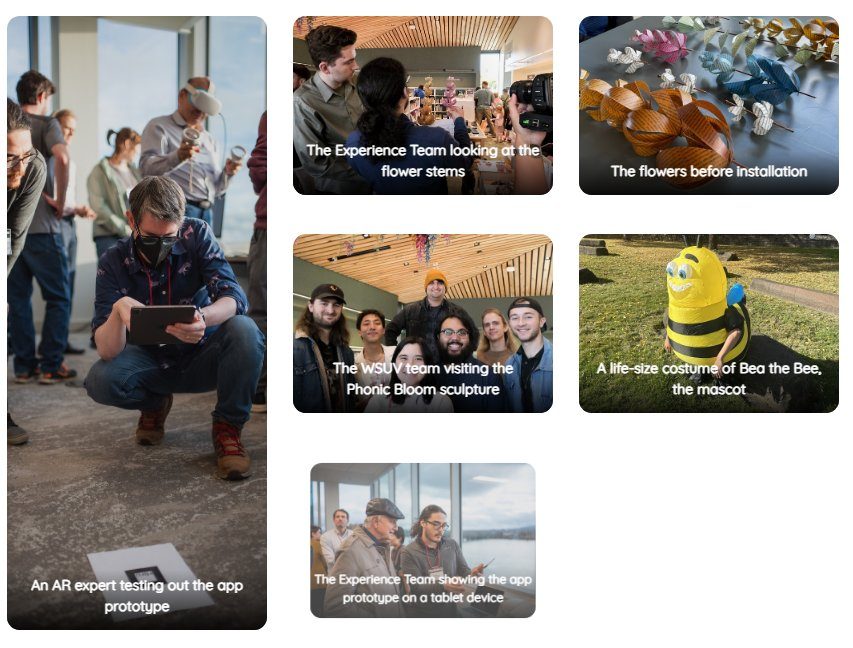
The Team at Work
The Solution
We designed and built a responsive educational website that documented the installation's development, explained the phonetic concepts behind it, and made the cultural significance of different languages' sounds accessible to a non-technical audience.
Information architecture and cognitive load principles guided every layout decision — making complex data scannable and understandable for library patrons encountering these ideas for the first time.
Impact & Learnings
The site extended the life of the installation beyond its physical run, making its story and process accessible to anyone who couldn't be there in person. It was deployed live and remains accessible to the public.
Leading from within the team
The best leadership decisions I made were the ones that got out of my team's way and let them do great work. Organizing and unblocking beats directing and controlling.
Research before design, always
Without the specialist interviews, we would have designed for ourselves. The interviews gave us permission to design for the community instead.
Complexity is a design problem
If someone doesn't understand what you've built, that's not their failure. It's yours. Every confusing moment is a design opportunity.